 Chat on WhatsApp
Choosing the right metal for a project is about more than just the price tag. It’s about performance, longevity, and how the material reacts to its environment. At Vishwakarma enterprises , we see clients struggle with the choice between Aluminum and Stainless Steel every day.
While they might look similar to the untrained eye, their properties are worlds apart. Here is a breakdown to help you make the right call for your next fabrication.
1. Strength-to-Weight Ratio
If your project needs to be mobile or lightweight (like aerospace components or custom vehicle racks), Aluminum is the clear winner.
Aluminum: It is roughly one-third the weight of steel. While it is softer, its strength-to-weight ratio is excellent.
Stainless Steel: It is significantly heavier and denser. However, it is much stronger and less likely to warp under high heat or extreme stress.
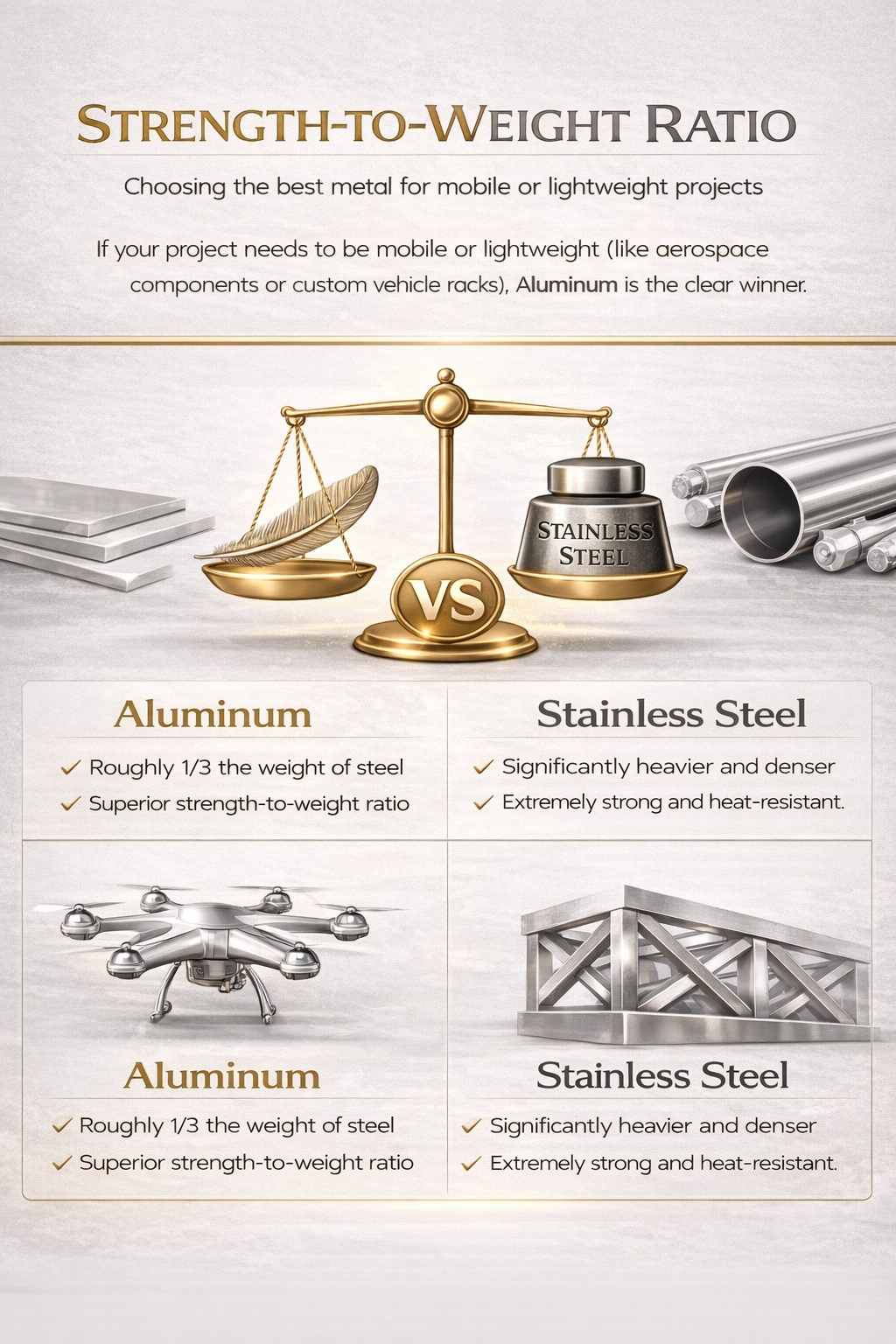
strength-to-weight ratio
2. Corrosion Resistance
Both metals are known for resisting rust, but they do it differently.
Stainless Steel: Contains chromium, which creates an invisible film that prevents corrosion. It is the gold standard for kitchens, medical equipment, and marine environments.
Aluminum: Develops a protective oxide layer. While it doesn't "rust" like iron, it can corrode in high-alkaline or acidic environments if not properly treated or anodized.
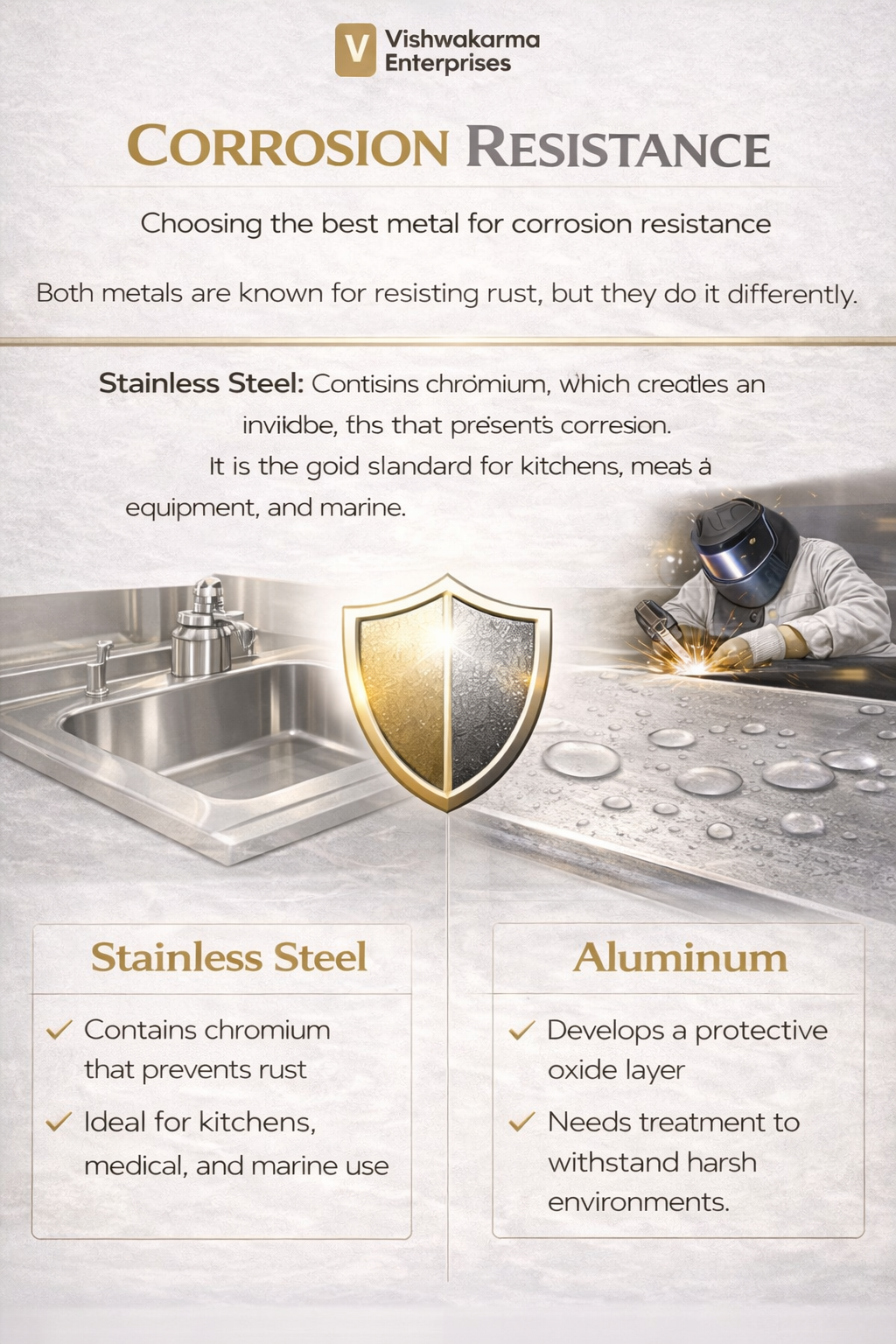
Corrosion Resistance
3. Cost Considerations
Budget is always a factor in custom fabrication.
Raw Material: Generally, aluminum is more expensive than basic carbon steel, but often cheaper than high-grade stainless steel.
Labor: Stainless steel is harder to work with. It requires more time to cut, weld, and finish, which can increase your total labor costs.
Cost Considerations
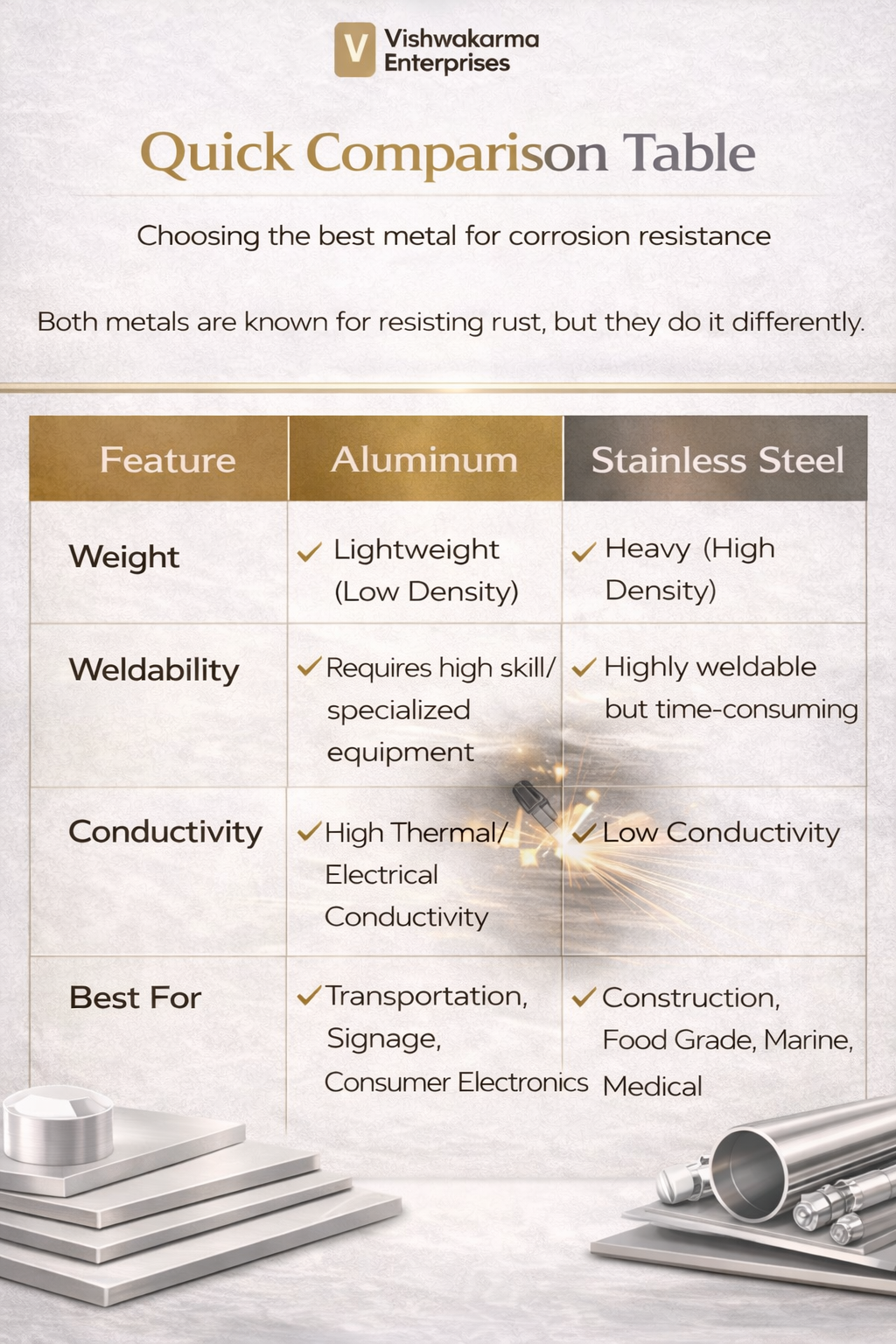
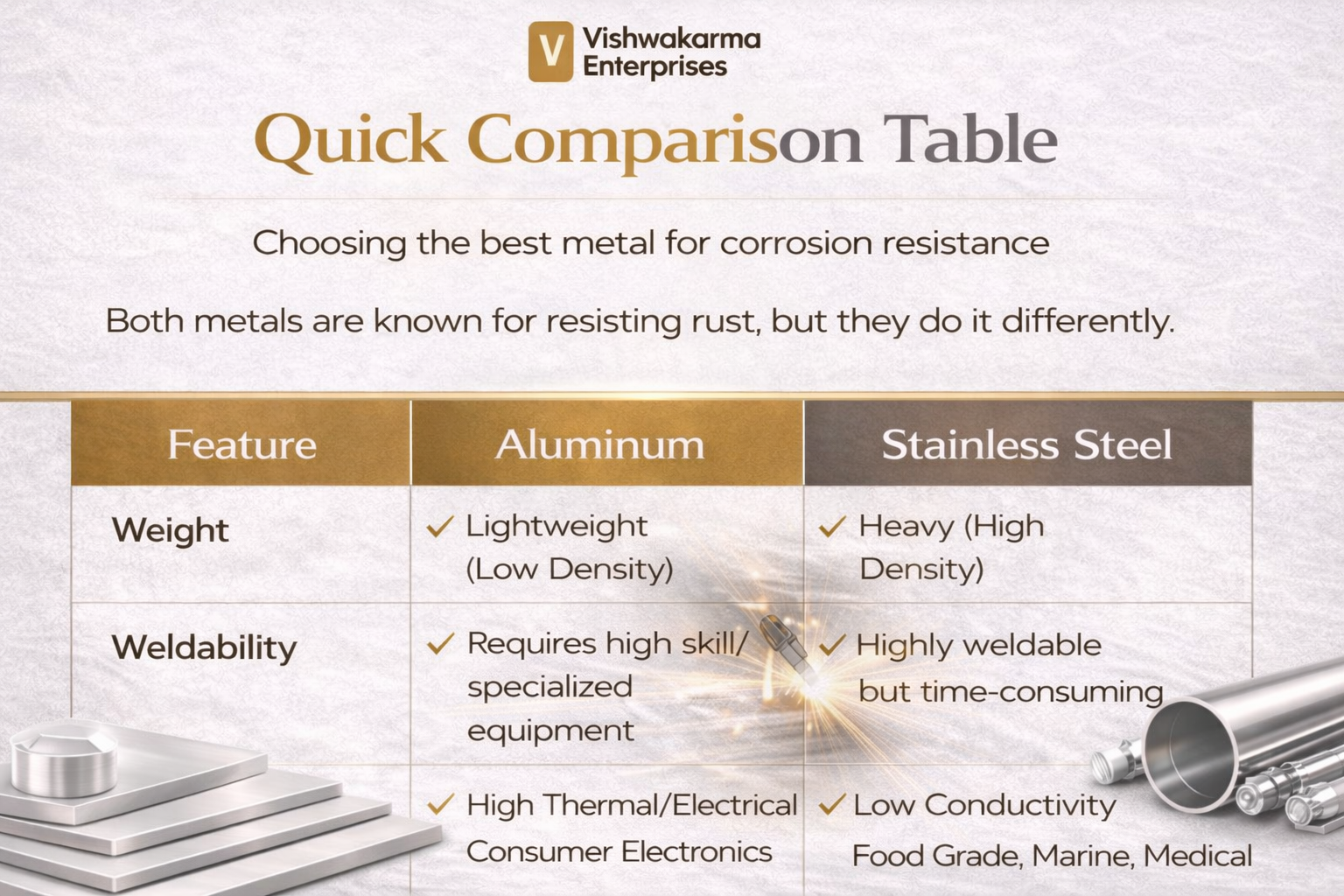
Quick Comparison Table
| Feature | Aluminum | Stainless Steel |
| Weight | Lightweight (Low Density) | Heavy (High Density) |
| Weldability | Requires high skill/specialized equipment | Highly weldable but time-consuming |
| Conductivity | High Thermal/Electrical Conductivity | Low Conductivity |
| Best For | Transportation, Signage, Consumer Electronics | Construction, Food Grade, Marine, Medical |
Which Should You Choose?
The Pro Rule of Thumb: If weight is your primary concern, go with Aluminum. If durability and long-term hygiene (like in food processing) are your priorities, Stainless Steel is worth the investment.
Choosing the wrong material can lead to structural failure or unnecessary costs down the line. Before you start your next build, consult with a fabrication expert to ensure your specs match your goals.
Get a Precision Quote Today
Ready to get started on your next project? Whether you need precision laser cutting or heavy-duty structural welding, our team at Vishwakarma Enterprises is here to help.
Contact Us for a Custom Quote : info@vishwakarmaenterprises.co